
How to Choose a Preschool in Portland
Finding the right preschool for your family can feel overwhelming. Portland families have a great range of options—from full day childcare and public preschool programs to Montessori schools, play-based preschools, co-ops, and small neighborhood programs.
But once you answer a few important questions about what your child and family actually need, the enormous field of endless possibility starts to become much more manageable.
Here are 5 important considerations we recommend discussing when choosing a preschool.
What kind of day is right for my child?
Every child has different needs when it comes to the right fit for them. And every family has different needs. It’s often most helpful to start with the practical question of how much time is ideal for your child to spend in preschool.
Some families need full-day care because of work schedules. And others aren’t quite ready or don’t necessarily want a full day of school. Think about your child's temperament, age, energy level, experience being away from caregivers, and what the rest of their day looks like.
There isn't one schedule that's inherently better. The right question is whether the rhythm of the program works for your child and your family.
In Portland, this decision is especially important because Multnomah County's free Preschool for All program is designed exclusively around a full-day preschool model. For families who need or prefer a full-day schedule, that can make Preschool for All an especially compelling option.
But if you do not want a full-day preschool experience, you'll need to look beyond Preschool for All and consider private, cooperative, part-day, or other independent preschool programs. Many of these schools are intentionally built around shorter mornings or partial-week schedules, which can be a better fit for younger children, families with flexible schedules, or parents who simply prefer a more gradual entry into school.
Before comparing individual schools, decide what you're actually looking for: full-day program or a part-day preschool experience.
How do I want my child to learn?
Preschools can have dramatically different ideas about what early education should look like.
Some programs are highly structured and teacher-directed. Others follow Montessori, Reggio Emilia, nature-based, cooperative, or play-based philosophies. And even two schools that both describe themselves as "play-based" may look quite different once you walk into the classroom.
Think beyond whether you want your child to learn their letters and numbers. Ask yourself what you hope they learn about learning itself.
What do you want your child to get out of preschool? Do you want to instill curiosity? Independence? Creativity? A comfort in experimentation and making mistakes? The ability to communicate and problem solve with other children? A love of nature? Confidence asking questions?
The National Association for the Education of Young Children identifies play, exploration, positive relationships, meaningful choice, and developmentally appropriate challenges as important characteristics of high-quality preschool education.
When touring a preschool, don't just ask, "What do you teach?"
Ask, "How do children learn here?"
The answer will tell you much more.
Who will know and teach my child?
Curriculum matters. Philosophy matters. But the adults spending every day with your child matter enormously.
This is why we highly recommend touring a preschool before making a decision. And when we you do, pay attention to the teachers.
Book a Tour at Youngset Preschool
How do they speak to children? Do they seem genuinely interested in what a child is telling them? Do they get down on the floor and engage in play? How do they respond when two children want the same toy, someone spills something, or a child becomes upset?
Ask about teachers' perspective and philosophy, but also ask how long they've been at the school. Teacher continuity can tell you something important about a program's culture.
And consider the size of the environment itself.
In a smaller preschool, teachers may have greater opportunities to know children and families deeply. In a larger program, there may be more classrooms, resources, schedules, or services available.
Neither model is automatically right or wrong. What matters is deciding what kind of relationships you want surrounding your child during these early years.
A good preschool should feel like somewhere your child will be known, not simply supervised.
What kind of community do we want around our family?
This question is easy to overlook when comparing tuition, schedules, playgrounds, and classroom materials. But preschool isn't only your child's first educational community. For many parents, it’s a community of other families with young children, too.
Schools vary tremendously in how involved families are expected—or invited—to be.
At one end of the spectrum are programs where parents primarily interact with the school at drop-off and pickup. At the other are cooperative preschools, where families participate directly in the classroom and help shape the school community.
Neither arrangement works for every family.
Some parents simply don't have the flexibility for substantial involvement. Others value having the opportunity to be integrated into their child’s world and have a relationship with their child's teachers, classmates, and classmates' families.
When you tour, ask:
How well do families know one another? Are there opportunities to participate in the classroom? Does the school organize gatherings outside of school? How are parents and teachers expected to communicate? What does the school mean when it talks about "community"?
Those answers can tell you whether you're simply choosing a preschool or choosing a community your whole family will become part of.
What matters most to our family?
After answering the first four questions, you may have a much clearer sense of what you're looking for. Now you can use the practical details to help narrow your options even further.
Location. Schedule. Tuition. School calendar. Transportation. Parent participation. Before- and after-school care.
Instead of asking which preschool offers the most, think about which of these factors matter most to your family.
Maybe having afternoons together is important to you. Maybe you want a school within walking distance of home. Maybe having parents welcomed into the classroom is a priority. Maybe you need a full-day schedule. Maybe you're willing to drive farther for teachers or an educational philosophy you really believe in.
Every family will weigh these things differently and there’s no one right anwer.
But most importantly, go see it.
You can learn a lot from a preschool's website, but to truly understand what a school is all about, you need to visit.
Often, families at Youngset know this is the right fit from the moment they walk in the door.
As intangible as it sounds, the decision often comes down to how you feel in the classroom.
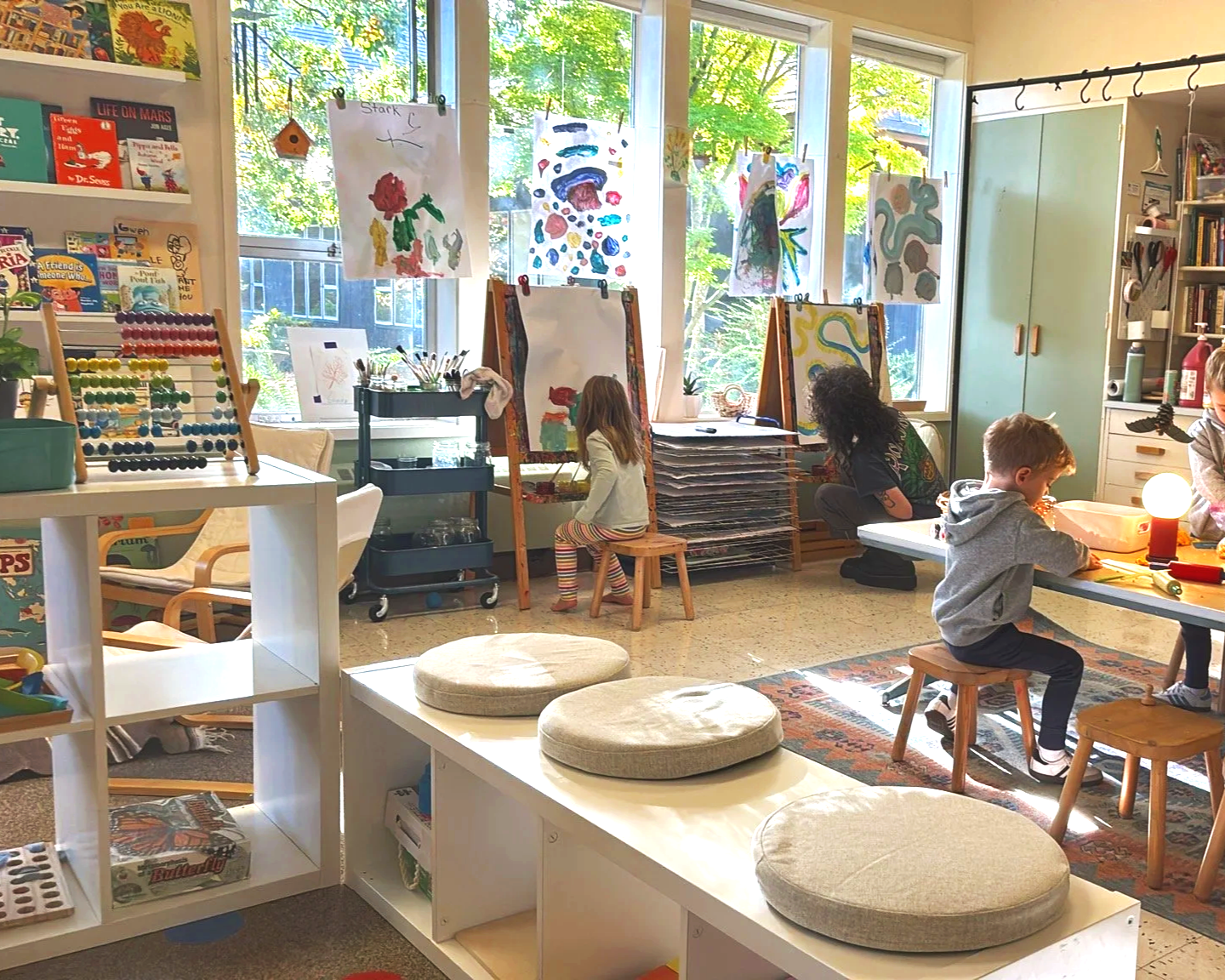
Are children deeply engaged in what they're doing? Is there evidence of their ideas and creations throughout the space? Do teachers seem calm and connected? Are children allowed to make choices? Is there laughter? Conversation? A little productive mess?
“If children feel safe, they can take risks, ask questions, make mistakes, learn to trust, share their feelings, and grow.” — Alfie Kohn
Preschool is one of the first places children begin building a world beyond their own families. The right school isn't necessarily the fanciest, most convenient, most academic, or most popular one.
It's the place whose values align with yours—and where you can picture your child feeling safe enough to explore, known enough to belong, and curious enough to keep discovering what's next.
Does a play-based co-operative preschool with exceptional teachers and a deeply integrated community in SW Portland sound right for your family?